Muscatine & the Civil War Exhibition
Muscatine & the Civil War Exhibition: March 19, 2026 - May 30, 2027
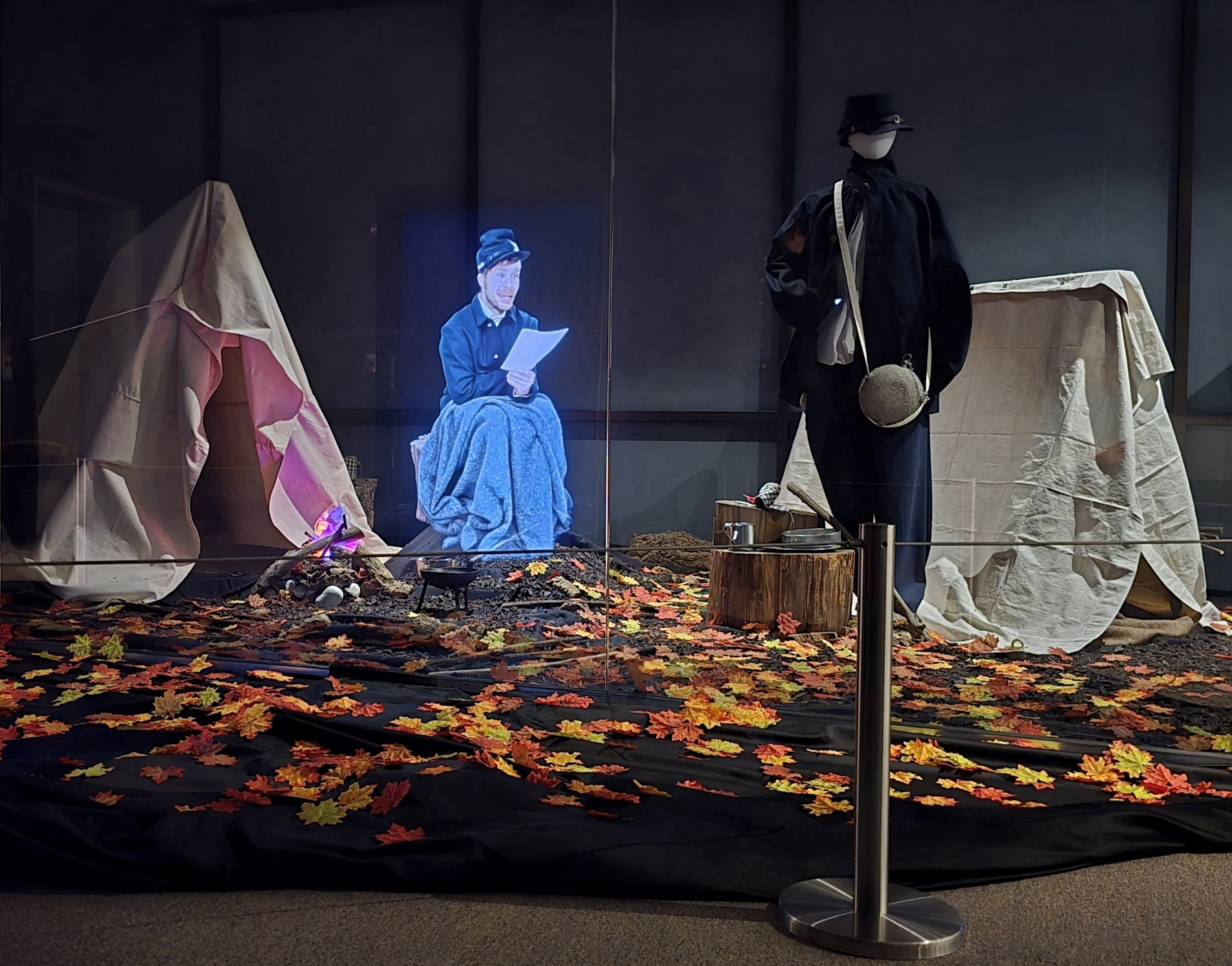
The Muscatine Art Center’s Civil War exhibition brings the national conflict into sharp local focus, telling the story of how one river town was forever changed by war. Through letters, uniforms, swords, flags, photographs, and deeply personal artifacts, visitors encounter the courage, sacrifice, and conviction of Muscatine citizens who answered the call to serve. Rather than presenting the war only through distant battlefields, the exhibition reveals how global events were experienced in homes, camps, hospitals, and on the very streets of Muscatine.
At the heart of the exhibition is the extraordinary collection of letters written by Daniel J. Parvin, a member of
Company “H,” 11th Iowa Volunteer Infantry. Carefully preserved by his descendants and donated to the Art Center in 1977, Parvin’s letters span the years from his enlistment in 1861 to his return home after being critically wounded in the Atlanta Campaign. A lively and observant writer, Parvin described the brutal realities of camp life—disease, hunger, exhaustion—as well as the chaos of battle at Shiloh, Vicksburg, and Atlanta. His words reveal not only the physical hardships of war, but also the emotional strain of separation from his wife Sarah and their young son, offering an intimate glimpse into a soldier’s heart.
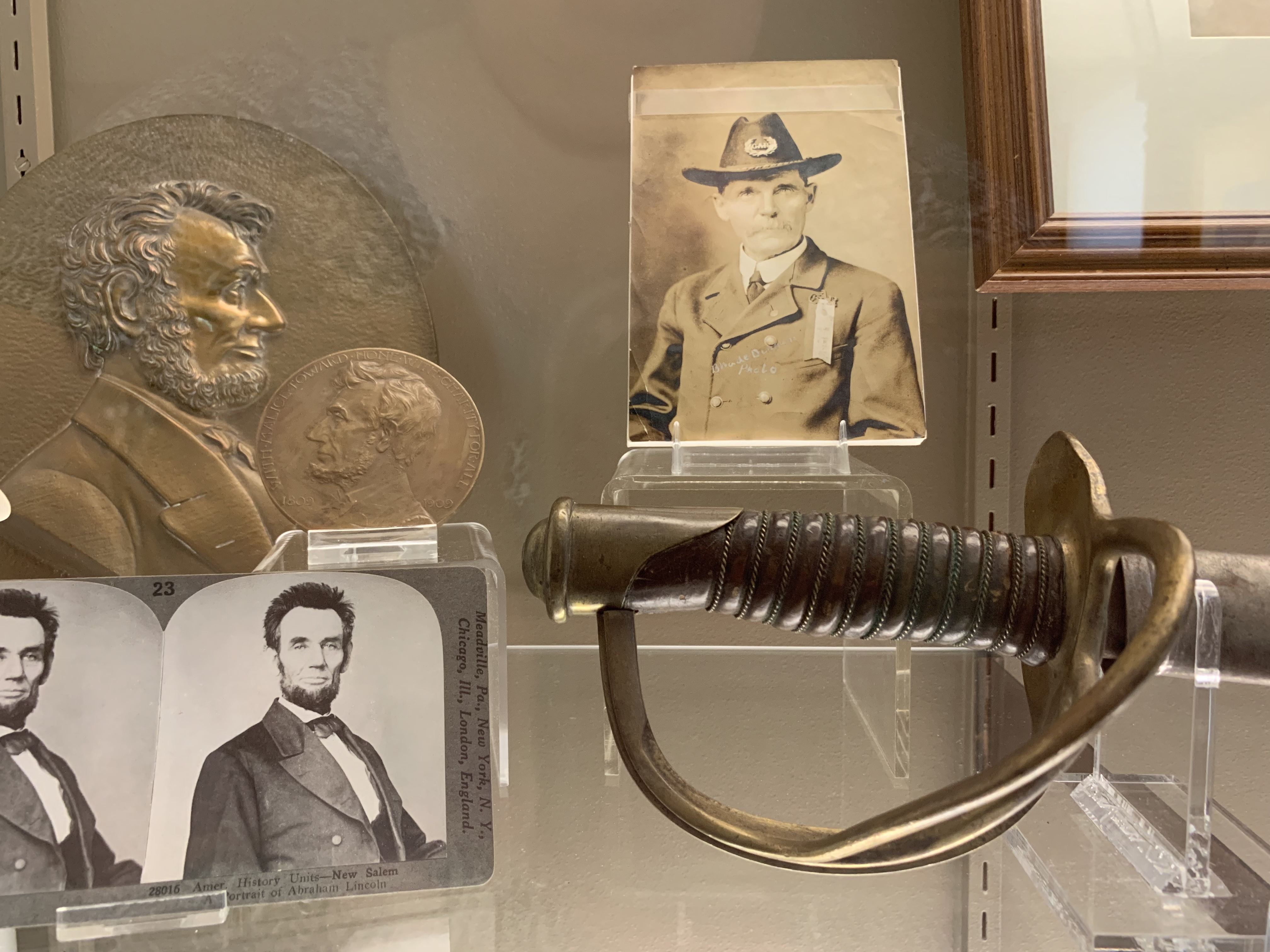
Equally compelling is the story of Thomas A. Burke of the 16th Iowa Volunteer Infantry, whose presentation sword is on view in the gallery. Burke, an Irish immigrant who settled in Muscatine, rose through the ranks and fought in some of the war’s most pivotal engagements, including Shiloh, Iuka, Corinth, Vicksburg, and Atlanta. After suffering a devastating wound at Big Shanty, Georgia, he died of complications in 1864. In tribute to his bravery, fellow veterans commissioned an engraved sword in his honor. The object stands as both a symbol of valor and a deeply personal memorial from comrades who refused to let his sacrifice be forgotten.
The exhibition also highlights the leadership and service of the Cadle family, whose members served in multiple Iowa regiments. Colonel Cornelius Cadle III distinguished himself at the Battle of Atlanta, later becoming instrumental in preserving the Shiloh Battlefield as a national park. Nearby, visitors encounter original discharge papers, commissions, and cavalry muster rolls that illustrate the administrative backbone of the Union war effort. These documents remind us that behind every battle were countless acts of organization, supply, and steadfast commitment.
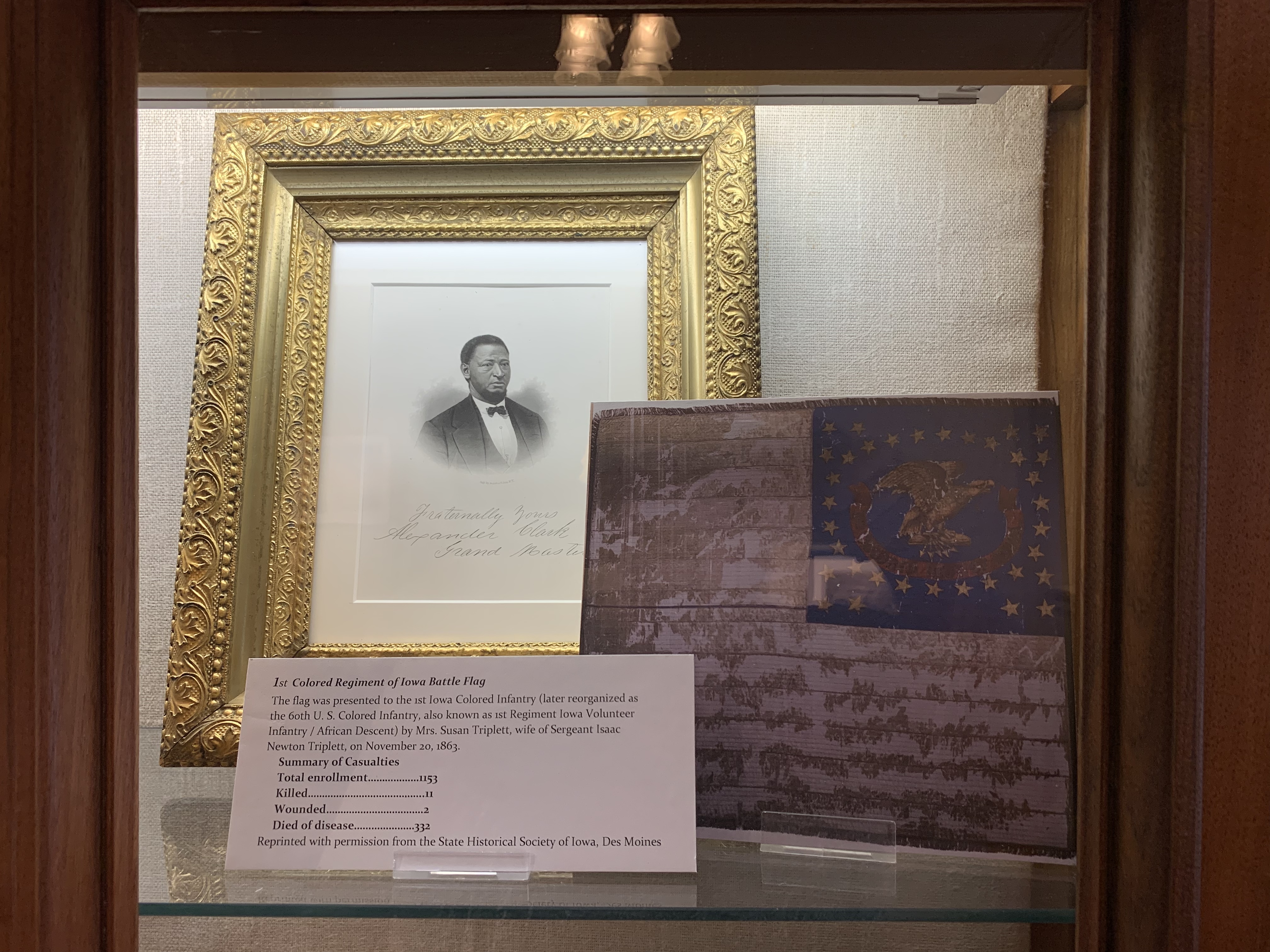
Muscatine’s contribution to the war also included the service of African American soldiers. The exhibition spotlights Alexander Clark’s efforts to enable black men to become soldiers. The result was the 1st Iowa African Infantry, organized after the Emancipation Proclamation and raised in part through Clark’s efforts. Clark’s advocacy and recruitment work reflected a broader struggle for citizenship, equality, and recognition.
Taken together, the stories and artifacts in Muscatine and the Civil War illuminate a community tested by division, sacrifice, and hope. From Daniel Parvin’s poignant letters to Burke’s memorial sword and the powerful imagery of regimental flags and early photographs, the exhibition transforms names in a history book into neighbors, fathers, sons, and friends. We invite you to visit the Muscatine Art Center to experience these remarkable stories firsthand and reflect on the enduring legacy of those who shaped our community during one of the most defining chapters in American history.

76,534 Iowans served in the Union Army - 3,450 died of wounds, 8,498 died of disease, 706 died of other causes, 8,500 returned home wounded.